
Parts of a Trailer Hitch

Essential Towing Equipment Every Driver Needs: 9 Parts of a Towing System. From RA Hitch & Truck Outfitters
Whether you’re towing a utility trailer across town, hauling landscape equipment, or preparing your vehicle for weekend adventures, understanding the essential components of a towing system is critical for safety and performance. At RA Hitch & Truck Outfitters, we install and service every major towing component — so we’ve created this guide to help you understand exactly what each part does and why it matters.
A complete towing setup consists of:
- The tow vehicle
- The trailer
- The equipment that connects the two safely
——————————————–
- Trailer Hitch — The Foundation of Every Towing Setup
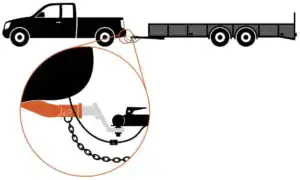
A trailer hitch is the primary structural connection between your vehicle and the trailer. It bolts directly to the vehicle’s frame and provides a secure mounting point for towing accessories.
Common hitch types include:
- Receiver hitches (Class I–V)
- 5th wheel hitches
- Gooseneck hitches
- Ball Mount — What Slides Into the Receiver Hitch
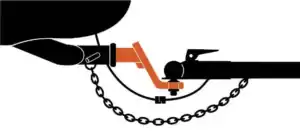
A ball mount includes a shank that fits into the receiver and a platform that holds the trailer ball. They come in fixed and adjustable versions.
- Trailer Ball (Hitch Ball)
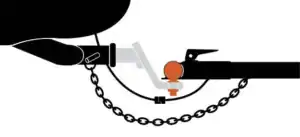
This is the actual connection point between the vehicle and the trailer. Trailer balls come in standard sizes and must match the trailer’s coupler.
- Hitch Pin or Hitch Lock
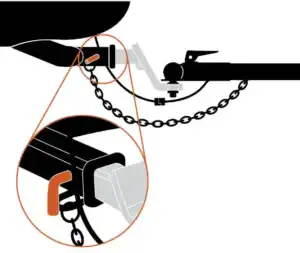
A hitch pin secures the ball mount. A hitch lock provides added theft protection.
- Trailer Coupler
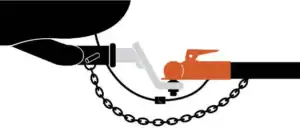
The coupler sits at the front of the trailer and latches onto the trailer ball. It must match the ball size and be properly adjusted.
- Safety Chains
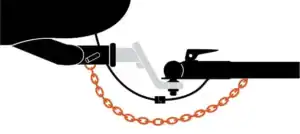
Every trailer must use two safety chains, crossed under the coupler, to prevent separation in an emergency.
- Trailer Wiring Harness
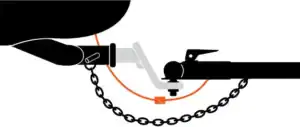
A wiring harness connects the vehicle’s electrical system to the trailer’s lights and brakes. Proper wiring is required by law and essential for safe towing.
- Tow Vehicle

Any vehicle — truck, SUV, van, or car — used to tow a trailer. Towing capacity must always match or exceed the trailer’s weight.
- Trailer

Trailers come in many forms: utility, landscape, enclosed, flatbed, boat, travel trailers, livestock trailers, and more. Equipment requirements vary, but all must have:
- Working lights
- Two safety chains
- A properly rated coupler
- Brakes if over 3,000 lbs (North Carolina law)
Additional Equipment You May Need:
- Ratchet straps and tie-downs
- Weight distribution system
- Sway control
- Brake controller
- Extended towing mirrors
Need Help Choosing the Right Towing Equipment?
RA Hitch & Truck Outfitters has served North Carolina drivers for over 40 years. We provide:
- Trailer hitch installation
- Wiring & brake controller installation
- Trailer setup and repair
- Safety inspections
- Expert towing guidance
Visit Us: 321 Leagan Dr. Raleigh, NC
Call: (919) 267-9595
Website: rahitch.com